A few weeks ago, we published the photos we got during our visit to the old gin at Franklin. We now offer this video from the excursion.
ENJOY!
Showing posts with label Franklin. Show all posts
Showing posts with label Franklin. Show all posts
Sunday, December 05, 2010


Wednesday, October 20, 2010
Franklin Gin
Photos Below!
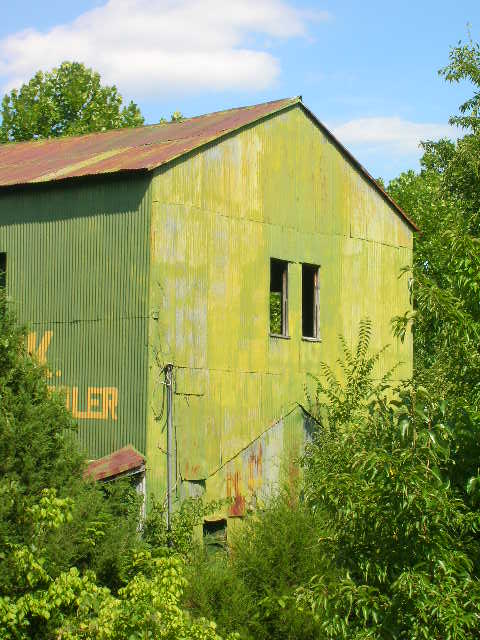
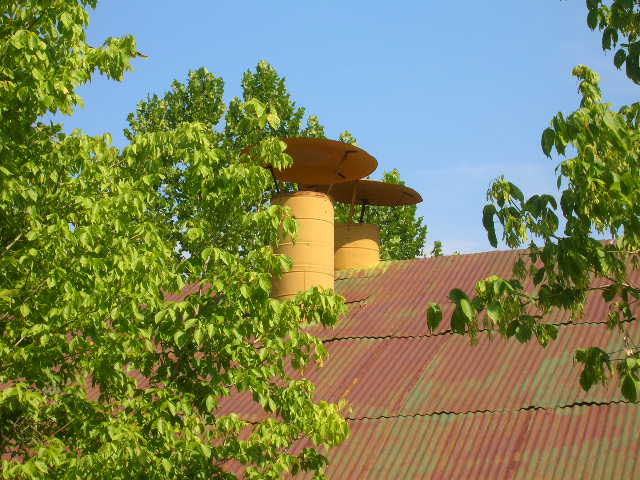
The old gin at Franklin Arkansas still stands as a monument of Izard County's industrious past. The existing structure sits on the spot the original Boler Mill and Gin where located. The original gin and mill was erected in 1898 but burned in 1919 before the building that still stands was built.
Genon E. Williams, author of the article, "History of the Boler Mill and Boler Family" from the April 1985 issue of the Izard County Historian reported that her mother once witnessed as many as 75 wagons lined-up at the mill! Mrs. Williams' mother also remembered people bringing their crops of wheat, corn, and cotton to the gin from as far away as Agnos, Day, Lacrosse, Wiseman, Larkin, Oxford, and Union.
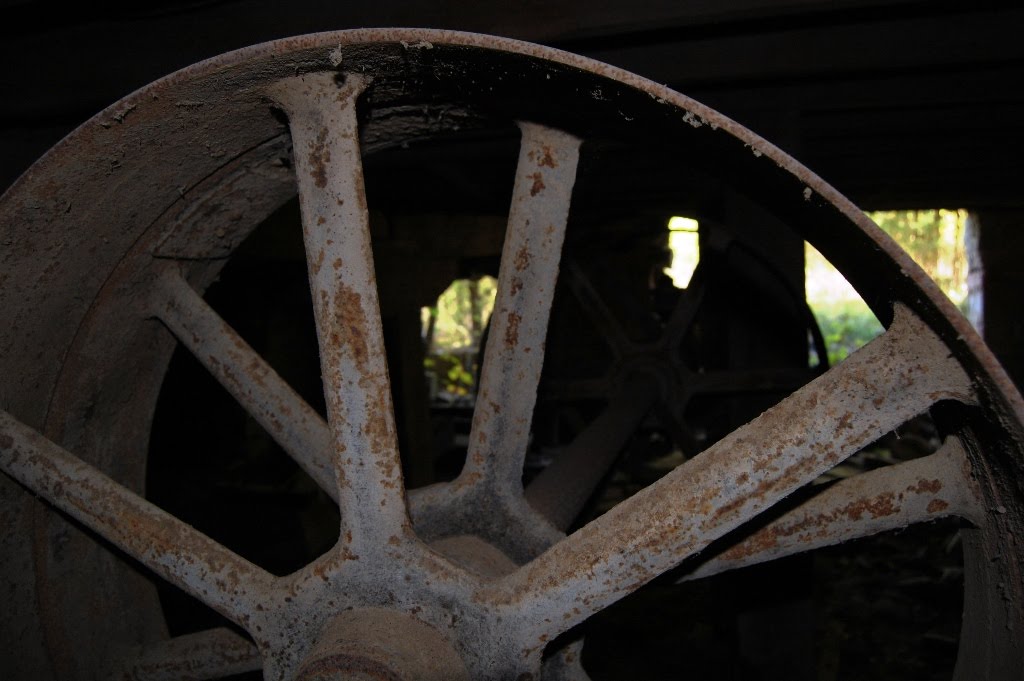
The EIC Crew is grateful to the Billingsley family for allowing us to explore this amazing old building that still sports some pieces of the machinery that once served the community and the county so well. We were surprised to find that some of this equipment is still in place.
Video of our excursion coming next week!




The old gin at Franklin Arkansas still stands as a monument of Izard County's industrious past. The existing structure sits on the spot the original Boler Mill and Gin where located. The original gin and mill was erected in 1898 but burned in 1919 before the building that still stands was built.
Genon E. Williams, author of the article, "History of the Boler Mill and Boler Family" from the April 1985 issue of the Izard County Historian reported that her mother once witnessed as many as 75 wagons lined-up at the mill! Mrs. Williams' mother also remembered people bringing their crops of wheat, corn, and cotton to the gin from as far away as Agnos, Day, Lacrosse, Wiseman, Larkin, Oxford, and Union.
The EIC Crew is grateful to the Billingsley family for allowing us to explore this amazing old building that still sports some pieces of the machinery that once served the community and the county so well. We were surprised to find that some of this equipment is still in place.
Video of our excursion coming next week!




Saturday, July 18, 2009
Old Franklin Jail ?
Today, while searching for a couple of old schoolhouses, Jim and I were told about the Franklin Jail still standing in a field. So, naturally, we found it!
Enjoy!
Video Below!
UPDATE! A friend of the site wrote this to me today (10/7/10):
We've gotten it wrong before...and likely will in the future. But we try. Oh yes we do!
Luckily we have friends like these to set us straight.
Note - One of the schoolhouses we were looking for was one near Sweet Home between Franklin and Lacrosse. A video-clip is included at the end of this video. The Sweet Home community served as home to many African-American families...most descended from slaves that once helped bring progress to Izard County. Because of this school's close proximity to Sweet Home, we are pretty sure it was a "colored school".


Enjoy!
Video Below!
UPDATE! A friend of the site wrote this to me today (10/7/10):
Denny,Another friend of the site had once asked us about the building featured in this post and told us that she did not ever remember a jail being at this location. This latest information certainly seems to confirm it.
I got time this after noon to go up behind the Franklin Baptist Church to look at the block structure that was referred to as the "Old Franklin Jail" in the video on the EIC website.
I asked around and according to JD Roberts who grew up just below there, that used to be used as an old root cellar to store the canned goods etc by the people who lived in the house located beside the block structure.
JD said the house that once stood on the foundation beside the block bldg. belonged to Mary and Dolmus ( spelled as it sounded), he could not remember their last name.
Later, Mary Williams built a house behind there and it to burned at a later time.
We've gotten it wrong before...and likely will in the future. But we try. Oh yes we do!
Luckily we have friends like these to set us straight.
Note - One of the schoolhouses we were looking for was one near Sweet Home between Franklin and Lacrosse. A video-clip is included at the end of this video. The Sweet Home community served as home to many African-American families...most descended from slaves that once helped bring progress to Izard County. Because of this school's close proximity to Sweet Home, we are pretty sure it was a "colored school".


Wednesday, November 12, 2008
Bank of Franklin
The Bank of Franklin was built in 1905. It has the unique distinction as being the only bank in the state to have not closed its doors during the March 9th, 1933 Bank Holiday in the aftermath of the 1929 stock market crash. We are told it was because a telegram sent out by the state to every bank was not received. By the time of this event, however, the bank had moved across the street into the building-block you can see from the rear view of the original building.
From The Encyclopedia of Arkansas History and Culture :
"In 1933, within a week of his inauguration, President Franklin Roosevelt called for a bank holiday in an effort to stabilize the nation’s economy. The Bank of Franklin is thought to be the only bank in the country that did not obey the Emergency Banking Act passed by Congress on March 9. When national bank examiners arrived in Franklin and commented on the bank being open, cashier Thomas W. Simpson replied that he had not received news of the law. Most historians accept his word, given the facts that Franklin had no telephone service in 1933 and the nearest railroad was fifteen miles away. However, Pamela Webb, in an article for the Arkansas Historical Quarterly, has suggested that Simpson’s political beliefs led him to ignore the order from the federal government."
The pretty little cottage stands behind the bank along Highway 56. It was built by the Simpson family on the spot their previous home stood before being demolished by a tornado in 1933. The Franklin Community Center was built in 1940 as just what it remains today...a community center. Though I had thought the cistern/well pictured was possibly the community well, I am told the town's community well was located in the middle of what is now Highway 56. This cistern serviced a home that stood near the bank at one time. The white building next to the Bank of Franklin was built as a barber shop in the 1930s.
Thanks to Mrs. Betty B. for helping with the info.


From The Encyclopedia of Arkansas History and Culture :
"In 1933, within a week of his inauguration, President Franklin Roosevelt called for a bank holiday in an effort to stabilize the nation’s economy. The Bank of Franklin is thought to be the only bank in the country that did not obey the Emergency Banking Act passed by Congress on March 9. When national bank examiners arrived in Franklin and commented on the bank being open, cashier Thomas W. Simpson replied that he had not received news of the law. Most historians accept his word, given the facts that Franklin had no telephone service in 1933 and the nearest railroad was fifteen miles away. However, Pamela Webb, in an article for the Arkansas Historical Quarterly, has suggested that Simpson’s political beliefs led him to ignore the order from the federal government."
The pretty little cottage stands behind the bank along Highway 56. It was built by the Simpson family on the spot their previous home stood before being demolished by a tornado in 1933. The Franklin Community Center was built in 1940 as just what it remains today...a community center. Though I had thought the cistern/well pictured was possibly the community well, I am told the town's community well was located in the middle of what is now Highway 56. This cistern serviced a home that stood near the bank at one time. The white building next to the Bank of Franklin was built as a barber shop in the 1930s.
Thanks to Mrs. Betty B. for helping with the info.


Wednesday, September 10, 2008
Hill's Chapel Cemetery (Franklin)
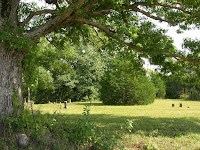
On a lonely backroad just outside of Franklin near the old Military Road lies the Hill's Chapel Cemetery. An early politician in the county, Lewis Williams lies here. Apparently, Lewis was also a 1st Lieutenent with Freeman's Regiment during the War between the States.
Also at rest in this place is George Burns, who has family ties to the Lewis Williams family (scroll down on the first Lewis Williams link for Burns' info).
Also buried here are members of the Billingsley, Love, Davidson, and Berry families who were instrumental in the development of the area.



Also at rest in this place is George Burns, who has family ties to the Lewis Williams family (scroll down on the first Lewis Williams link for Burns' info).
Also buried here are members of the Billingsley, Love, Davidson, and Berry families who were instrumental in the development of the area.


Tuesday, February 19, 2008
A Few Favorites
Illness, weather, and personal obligations have kept us out of the woods for the past couple of weeks. Here's a few shots from older posts for your viewing pleasure!


Saturday, August 05, 2006

Thursday, May 25, 2006
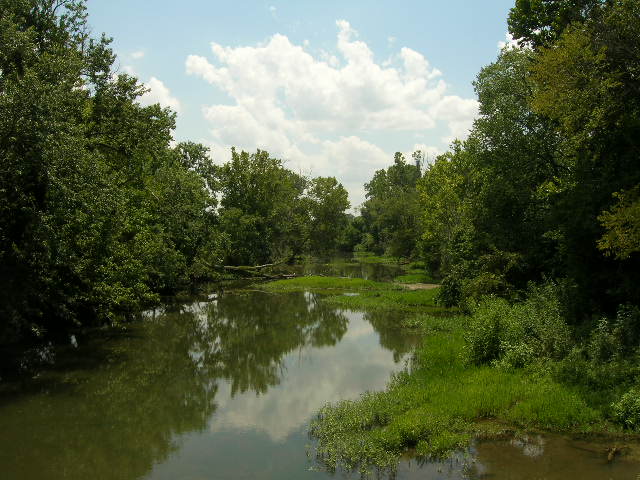
Strawberry River/Franklin
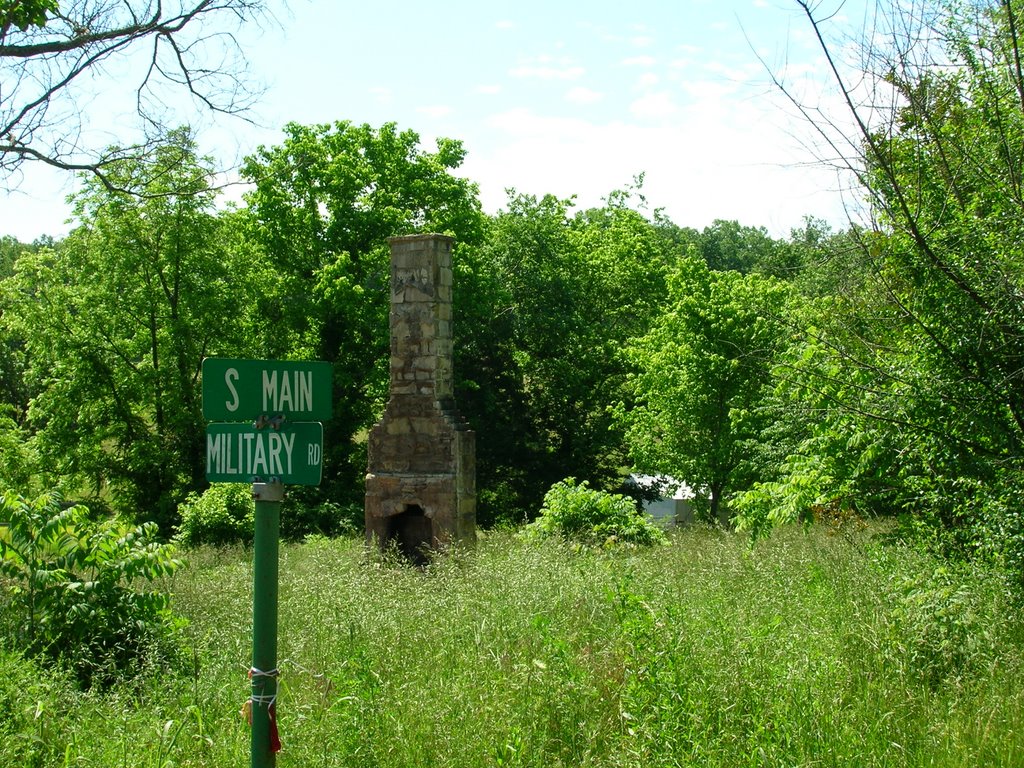
The Old MIlitary Road was used to move native-Americans during the infamous "Trail of Tears". There is an interesting article about the early roads in Arkansas that includes a brief mention of this road which ran from Batesville to Norfork. Here's a map detailing the various routes used to relocate Native Americans. Benge's route is the one that runs through Izard Conty.
Here is paragraph from W.E. McCLeod (1869-1951)
"The other branch of the Military road extended westward from Jackson to Northfork and on to Batesville and Ft. Smith. This was a road used ln the removal ot the Indians to the west, and by immigrants into Northwest Arkansas. It is another road called the Military road, though it was only a branch of the main road, What a wondertul story these old roads could tell if they could speak. It would be a story of silent, sorrowful Indians as they treked their way to a land they knew not, and of thousands of hope- tul immigrants as they wended their way in canvas covered, ox drawn wa- gons, on horseback and on foot to make new homes in the south and west. The roads described were great immigrant routes, particularly in northeast Arkansas; but there were several others a little later which were important in the settlement and development of this section of the state. Soon after 1836 a road was opened from Izard county eastward through Lawrence County, (then including Sharp) to Greene county, This road went by the new towns of Smithville and Powhatan, where there was a fine ferry across Black River. Smithville was and is situated on this road where it intersected the branch of the Military mentioned above, and its favorable location accounts for its continuance to this day as one of the best off railroad towns in the country, The two roads are now graveled highways."
I'll have some shots of the Strawberry River eventually.
Subscribe to:
Posts (Atom)